 |
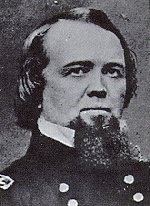
| Maj. Gen. John Pope |
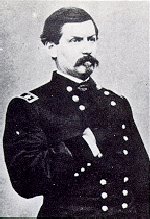 |
| Maj. Gen. George B. McClellan |
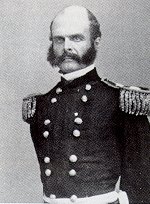 |
| Maj. Gen. Ambrose E. Burnside |
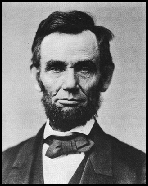 |
| President Abraham Lincoln |
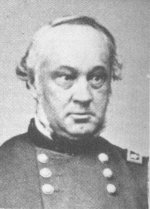 |
| Maj. Gen. Henry Halleck |
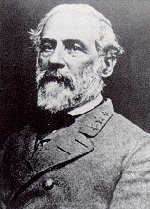 |
| Gen. Robert E. Lee |
McClellan, in a letter to his wife, states that he could advance on Richmond with 20,000 reinforcements.
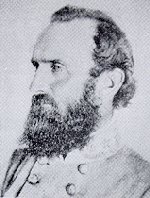 |
| Maj. Gen. T.J. Jackson |
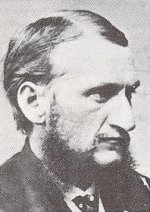 |
| Col. Judson Kilpatrick |
Halleck arrives in Washington and assumes command of the United States Army. His first act is to visit McClellan at Harrison's Landing, where he arrives on the 25th.
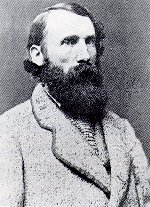 |
| Maj. Gen. A.P. Hill |
Halleck instructs McClellan to send his sick off from the Peninsula.
Captain Mosby, at Fort Monroe, is exchanged and returned to the Confederate army. He reports to Lee that Burnside's corps has been ordered to Fredricksburg.
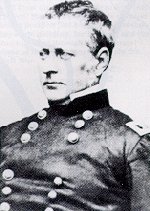 |
| Maj. Gen.
Joe Hooker |
Pope orders his army to concentrate at Culpeper for an advance.
Halleck reiterates his order to McClellan to withdraw.
Jackson learns of Pope's concentration and, with Lee's concurrence, determines to attack before the concentration can be completed.
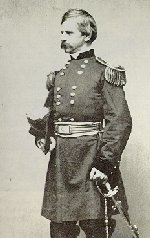 |
| Maj. Gen. Nathaniel Banks |
Jackson, now heavily outnumbered, retreats back to Gordonsville.
Lee receives a deserter from McClellan's army, who reports that McClellan's army is being loaded onto transports. (Other sources report the deserter's arrival on Aug. 7th. In either case, McClellan's main body was still on dry land at Harrison's Landing. It is possible that the deserter saw McClellan's sick being loaded under his orders received on July 30th and reiterated on Aug. 7th.)
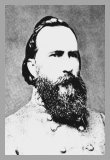 |
| Maj. Gen. James Longstreet |
The Army of the Potomac begins withdrawing from Harrison's Landing, falling back to Fort Monroe to take ships for the Rappahannock line.
Major General D.H. Hill, commanding one of Lee's divisions, reports the Federal withdrawal from Harrison's Landing to Lee.
Lee receives word from Petersburg that more than 100 vessels have sailed down the James River away from Richmond. (It is unclear whether this report was true or not.) Concerned that McClellan may be moving to unify his army with Pope's, Lee orders an attack on Pope's army for Aug. 18th.
Jackson crosses a part of his force over the Rappahannock at Beverly's Ford; but the Union army reacts strongly and forces him back to the south bank.
Brigadier General Hermann Haupt, commanding Union railroad operations, finds that he cannot bring Heintzelman's corps forward by rail because Pope has ordered all the cars on the line to Warrenton Junction. The time required to locate and return the cars delays the movement of Heintzelman's corps to the front.
(Overnight) Stuart's cavalry, raiding behind Union lines at Catlett Station on the railroad, capture Pope's coat and, more importantly, his dispatch book, which reveals the impending arrival of McClellan's forces.
McClellan, accompanied by Major General William Franklin's corps, sails from Fort Monroe. The next day, McClellan lands at Aquia Creek, Franklin's corps at Alexandria.
The first troops from McClellan, Brigadier General John Reynolds's division of Porter's Fifth Corps, reach Pope from Aquia Creek. The rest of Fifth Corps comes up through the following day.
Lee, armed with knowledge of Pope's position from his dispatch book, and worried about the impending arrival of McClellan's army, orders Jackson to march around the Union right flank and attack Pope's supply lines at Manassas Junction, while Longstreet holds Pope on the Rappahannock line.
Major General Philip Kearny's division of Heintzelman's Third Corps reaches Pope at Warrenton Junction. The other division, Hooker's, will arrive the next day.
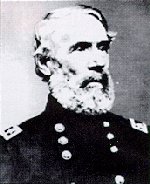 |
| Maj. Gen. Edwin Sumner |
McDowell, finding Longstreet in strength, decides not to cross the Rappahannock, with Pope's approval.
Word reaches Pope around midday that Confederates have passed through Thoroughfare Gap in strength. Pope does nothing in reaction to the report. (Pope's post-battle report will claim that he did, but the claim is false.)
At sunset, Jackson's corps reaches Pope's supply line at Bristoe Station. Pope quickly learns of their presence, as they prevent Pope's trains from running on the line, and they destroy the railroad bridge over Broad Run.
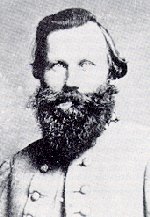 |
| Maj. Gen. J.E.B. Stuart |
Before dawn, Jackson moves up the rail line and captures the Union supply depot at Manassas. After taking what his troops can carry and destroying what they cannot, he retires. Hooker's division makes an attack on his rearguard under Major General Richard Ewell, retaking Manassas, but Ewell gets his entire command away and destroys the railroad bridge at Manassas.
At dawn Pope orders his army to concentrate at Gainesville to attack Jackson. After learning of Jackson's capture and destruction of Manassas, that night he changes his mind, ordering a concentrate the next day at Manassas (which Jackson has already left). Upon learning of Jackson's departure the next day, and hearing reports of A. P. Hill's movement towards Centerville, Pope revises his orders again, to concentrate his army at Centerville.
At the initiative of Haupt, two brigades leave the Washington garrison to scout at Manassas. They make a brief attack on Jackson which is easily repelled. But following the repulse, McClellan cancels orders, issued earlier that day, for Franklin to march to Gainesville, and instead holds him in Alexandria for two days.
A. P. Hill's division moves north towards Centerville, then turns west and recrosses Bull Run on the Stone Bridge, camping for the night at Groveton. Jackson's other divisions reach the same point, by more direct routes, by noon the following day. The fact that Jackson's three divisions have left Manassas by three different routes will cause Pope to completely lose track of Jackson's position.
Jackson spots Brigadier General Rufus King's division of McDowell's corps marching towards Centerville on the Warrenton Turnpike, near Groveton. He attacks it, but six of its regiments (Brigadier General John Gibbon's Iron Brigade plus two regiments from Brigadier General Abner Doubleday's brigade) hold their ground against two of Jackson's divisions. Fighting ends at dark: King and his commanders conclude the turnpike is blocked, and move instead to Manassas along the Manassas-Gainesville road. Ewell receives a wound which will cost him a leg; also wounded is Brigadier General William B. Taliaferro, commanding Jackson's division in place of Winder.
Longstreet's command passes through Thoroughfare Gap at 2p.m., which is undefended. McDowell, realizing the importance of defending the Gap (though Pope does not), sends Brigadier General James Ricketts's division of his corps to close it, but they arrive too late, instead meeting Longstreet at Haymarket, where Ricketts is quickly flanked and driven back. (Brigadier General John Buford's cavalry brigade has been observing Longstreet's advance; but contrary to the story in the novel Killer Angels, did not oppose his march through Thoroughfare Gap, nor at any other point.) At the end of the engagement, Longstreet and Lee can clearly hear the firing at Groveton, only a few miles distant.
After watching the Groveton fight, Pope, knowing at last where Jackson is, orders yet another concentration point for his army, this time at Groveton. At this time he is not aware that Ricketts's fight has occurred, nor that Longstreet is through Thoroughfare Gap.
 |
| Maj. Gen. William B. Franklin |
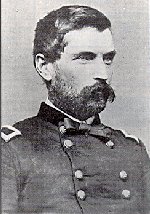 |
| Maj. Gen. John Gibbon |
(Morning) Pope learns of the withdrawal of King's division from Groveton to Manassas. Believing that he needs a strong position west of Groveton to block Jackson from retreating, and that the Manassas-Gainesville road is still open, he orders Porter to move his troops to Gainesville.
(Morning) Longstreet marches at 6 a.m. and reaches Jackson around 10 a.m. He takes position on Jackson's right, blocking the Manassas-Gainesville road. Lee and Longstreet discuss an attack, but decide not to make one; the Federal left is protected by two unengaged divisions, and Porter's Fifth Corps, approaching on the Manassas-Gainesville road, threatens Longstreet's right flank if he advances.
Pope's army, badly scattered as a result of Pope's frequently changing orders the previous two days, cannot mount a unified attack on Jackson's position. In the morning, Sigel's corps attacks alone and is repulsed. That afternoon, Heintzelman's corps and part of Reno's corps are thrown in and similarly repulsed. Pope orders Reynolds to move his division, guarding the Union left flank against Longstreet, to move right and join the attack. Reynolds protests, reporting the danger from Longstreet; Pope, believing Longstreet is not up, ignores the protest and the report, but allows Reynolds to remain in place.
About 11a.m., Porter and McDowell receive a Joint Order from Pope, directing them to move up the Manassas-Gainesville road and join the left flank of the Union battle against Jackson. The position of Longstreet's corps makes this impossible. The Joint Order gives Porter and McDowell discretion to disregard it if advantageous, and they decide to do so. McDowell takes his command back to the main Union position; Porter remains in place, preventing Longstreet from advancing but not otherwise contributing to the battle. At 4:30 p.m., Pope sends another order to Porter, ordering him to attack Jackson's right flank, still unaware of Longstreet's presence. Porter, knowing Longstreet's strength, makes no attack. Pope, enraged, orders Porter to fall back from Longstreet's flank and join the main army in front of Jackson.
(Afternoon) About 4p.m., Longstreet detects the withdrawal of McDowell's corps from his right, and the inactivity of Porter's corps. Lee proposes an immediate attack; Longstreet, concerned about the approaching darkness, proposes a reconnaissance in force, to be followed by an attack the next morning. Lee approves Longstreet's proposal. The reconnaissance leads to moderate fighting with Reynolds' division, but Reynolds holds his position and the Confederates fall back to their starting point. Pope seizes on this as evidence that the Confederates are in retreat. He orders Reynolds to pull back, exposing his left flank, and prepares to renew his assault on Jackson the next day.
|
| Maj. Gen. William B. Franklin |
(Morning) Pope continues to believe that the Confederates are retreating despite multiple reports from his corps and division commanders that they are not. Despite this, Pope issues no attack orders until noon, when he orders an attack on Jackson by one corps (Porter's) alone. Pope receives, and disregards, several reports that his left flank is being turned; and Porter's movement to attack Jackson leaves one brigade (Colonel Nathaniel McLean's) plus one regiment (5th New York) guarding the Union left.
(Afternoon) Porter's attack on Jackson shakes Jackson's lines, and he calls on Longstreet for assistance. Longstreet opens fire with Colonel Stephen D. Lee's artillery battalion, then pushes five divisions forward against Porter's left flank, just as Porter's attack is being repulsed. The 5th New York is destroyed and McLean's brigade demolished; but Pope shifts units from his right to reinforce his left and stops Longstreet's attack before it reaches the Stone Bridge over Bull Run. Jackson, his troops battered, does not join the attack by moving on Pope's weakened right. After dark, Pope retreats across the Stone Bridge to Centreville.
|
| Maj. Gen. William B. Franklin |
Pope, now reinforced by all four corps of the Army of the Potomac, spends the day resting and reorganizing at Centerville, motionless.
Pope detects Jackson's advance and makes one more attempt to crush him. He sends forward two divisions, under Kearny and Major General Isaac Stevens, to attack Jackson's advance at Chantilly. The fighting is inconclusive, but Jackson's advance is halted. Both Stevens and Kearny are killed in the fight. Pope's army falls back to Washington.
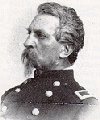 |
| Maj. Gen. Phil Kearny |
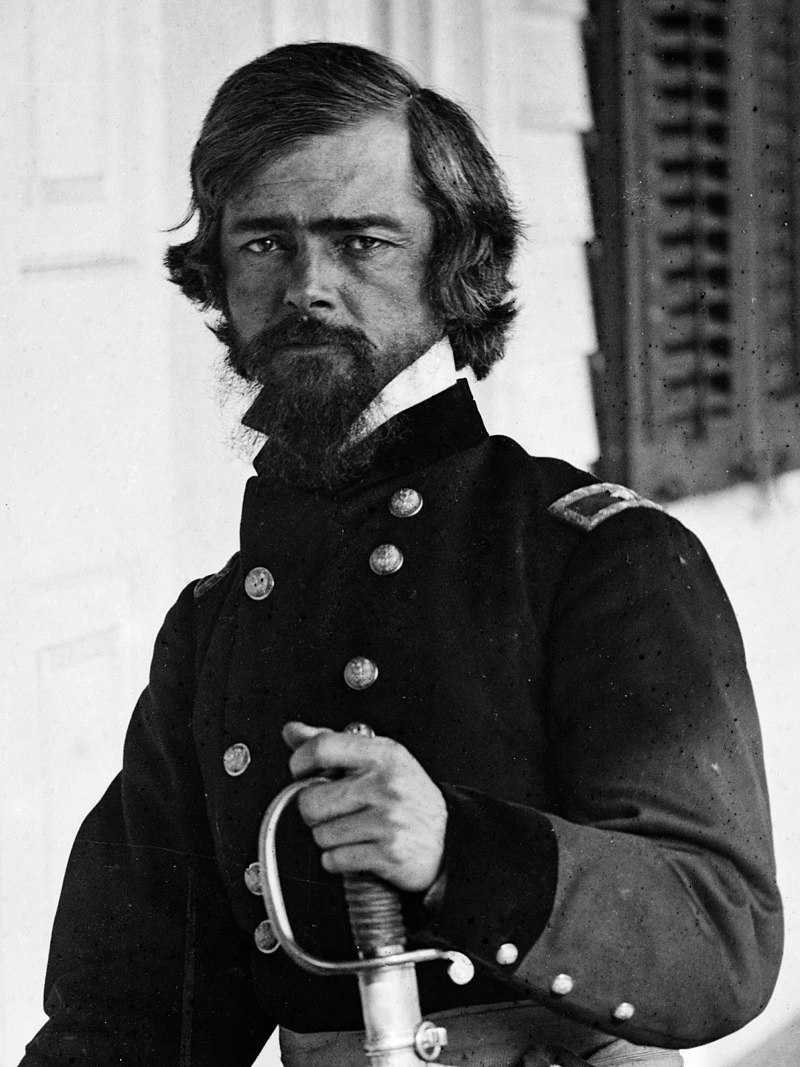 |
| Maj. Gen. Isaac Stevens |
Lee concludes that an attack on Washington is hopeless, and the campaign of Second Manassas ends.